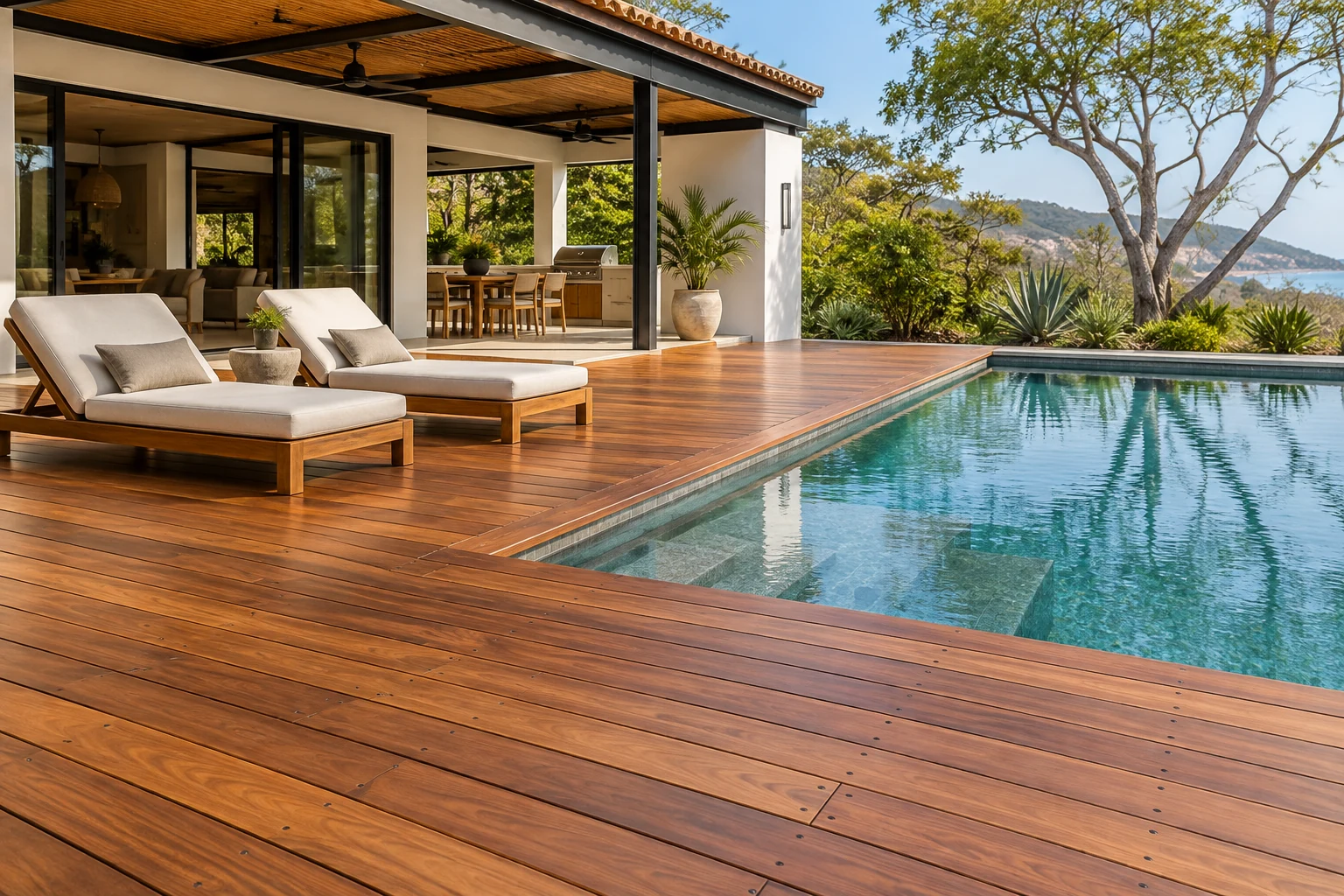
Separate appearance from condition
A deck can look tired for more than one reason. An ageing coating, surface dirt or uneven colour is different from damaged boards, loose fixings or movement in the support structure. A useful assessment separates surface work from repairs that affect how the deck performs.
Photograph the entire deck and the areas that concern you. Include edges, changes in level, fixings and any visible underside. Mention loose boards, movement, water pooling or previous repairs. Those details help shape an inspection; a photo alone cannot establish structural condition.
Decide what can be retained
A restoration scope may combine preparation, selective board replacement, fixing work and a new finish. The amount that can be retained depends on the actual condition, previous treatments and construction. Replacing a defined area is different from resurfacing the whole deck or rebuilding its supports.
Ask for the proposed work to distinguish between these tasks. Where new timber meets existing boards, appearance and dimensions need consideration. The quotation should make clear which areas are being repaired and what assumptions remain subject to opening up or inspection.
MAKE A MORE INFORMED CHOICE.
Separate appearance from condition.
Try a direction. See what makes the first conversation useful.
A tired finish
Existing coatings, exposure and previous care affect the preparation discussion. Product information helps define the finishing approach.
Bring a little context: Overall and close photographs, exposure and previous coating information.
Explore an approximate footprint
This calculates area from your measurements. Scope and specifications follow assessment.
Treat preparation and finish as a system
Before choosing the final look, identify the existing coating if possible. Preparation needs to suit the timber and the treatment being applied. Product instructions should guide application conditions, preparation and curing; adding more coats is not automatically the same as following the correct system.
Discuss the appearance you prefer, the deck’s exposure and the maintenance you are prepared to do. Covered and uncovered sections may weather differently. A sample area can help set expectations for colour and sheen before committing to the whole deck.
Plan around the way the property is used
Access, furniture, pool use and weather windows can affect the practical sequence. Let Harrison know whether the property is occupied, rented or empty while work takes place. A useful plan identifies where materials can be stored and which parts of the property need to remain usable.
Once the scope is defined, timing should reflect the actual repair work, the specified finishing system and site conditions. The project planner records your preferred timing; it does not promise a completion date before those details are assessed.
Keep the maintenance conversation going
Restoration is also an opportunity to agree how the deck should be looked after afterwards. Cleaning methods and future care should suit the timber and coating manufacturer’s instructions. Avoid assuming that a finish makes timber maintenance-free.
Save your approximate dimensions, photographs and condition notes in a project brief. Include any previous product information you have. That gives the first conversation a more useful starting point than a single request to “sand the deck.”
LET’S TALK ABOUT YOUR HOME
A few helpful details.
A photo or two, a rough measurement and the changes you have in mind. Share what you have.
- Overall photos plus close views of concern areas
- Approximate dimensions and covered/uncovered portions
- Known previous coating or stain
- Boards, fixings or movement that concern you
- Property occupancy and access during the work
BEFORE YOU BEGIN
A few good questions.
Can damaged boards be replaced as part of refinishing?
A defined restoration scope can include selective repairs, subject to assessment. The quotation should distinguish replacement work from surface preparation and finishing.
Can you quote from photographs alone?
Photos are useful for the first conversation. A final scope may require an inspection, measurements and confirmation of hidden conditions or previous coatings.
Will the planner give a price per square metre?
It calculates your approximate footprint, not a restoration quotation. Condition, access, repair quantities and the finishing system need to be established first.